Seeing the world the way “it really is” is really hard. We have a limited perspective, and that perspective comes shaded with our own experiences and biases. In this week’s “Timely Innovations” we wanted to share some innovators who are changing the way they are looking at the realities that matter to them. These innovators are putting sensors in new places, reframing their destinations, and reflecting on the ways new technologies are impacting how we think about our own work. Sometimes they are able to see things more clearly. Sometimes their innovations are actually muddying the waters. Our hope is that in observing these innovative observers, we might see our own work a bit more clearly.
More Eyes on the Road
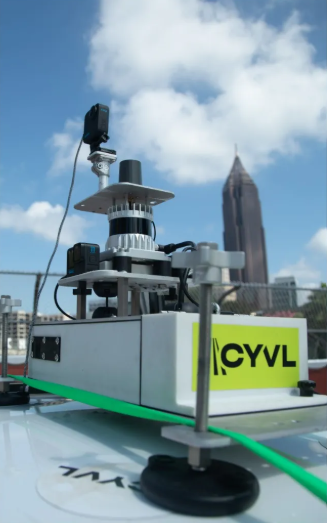
If you were able to ask social media for defining features of Atlanta, one thing you would be sure to see is metal plates placed over potholes with an alarming casualness. Atlantans approach these impromptu pothole bridges with great suspicion because no matter how many times you have driven over one, you can’t be sure how this one will behave. Well, the City of Atlanta has been experimenting with new technology to greatly reduce the need for these metallic, street band-aids. The City has partnered with Cyvl, a company that has placed cameras on DOT vehicles to identify existing potholes and aspiring potholes. It’s
way more efficient, “The traditional way of mapping DOT's assets would take up to a year, but the Cyvl technology cuts that time down to about three months.”
Also, “After the 2024 scan of Downtown, Atlanta DOT crews resurfaced corridors in need of repair, resulting in a 60% drop in potholes and a 70% drop in potential potholes.” Basically, by distributing its ability to detect problems, the City greatly multiplied its eyes and brought itself a significantly more data-rich picture. Now, can the city keep up with this new work? Will people trust these distributed cameras? The City will perhaps need new ways to gather this information as well.
The Opportunity in Between
There is another company trying to make data significantly more accessible, but they aren’t hitting the streets; they are taking to the skies.
Sceye recently launched a stratospheric blimp, called ST1 which flew from New Mexico to Japan and back. Onboard ST1 was
SceyeCell, “a first-of-its-kind “cell tower in the sky” designed to deliver wide-area mobile broadband directly to standard devices from the stratosphere. When deployed at full scale, one Sceye HAPS is designed to cover the equivalent area of approximately 500 terrestrial towers.” Sceye is imagining a world where people explore the stratosphere because it is much cheaper to get there than orbit. You can imagine present day use-cases for this technology as well (music festivals, disaster relief, internet in remote environments etc.). The concept is an interesting way of avoiding a binary (earth v space) and exploring what exists in the middle of the binary. Opportunities exist in these in-betweens.
When the Prototype Lies to You
We are going to conclude with another mindset shift. Steve Blank, Stanford Professor and Lean Startup Guru, has been releasing a series of blogs on his entrepreneurship class called “
The Year AI Came For Us: Teaching Entrepreneurship Will Never Be The Same”. It is worth paying attention to whether you teach entrepreneurship or not. Blank is tracking what is happening in the world of entrepreneurship due to generative AI. The place that is causing him the most concern is the fact that digital MVP’s can be created at an extremely low cost. There are aspects of this that are exciting, but Blank has noticed that this ability is
messing with entrepreneur’s objectivity about their own work, “Creating products rapidly at almost no cost had allowed teams to make bad ideas go faster… In the end, many students couldn’t let go of the initial ideas that AI had helped them build. Pivots become more expensive psychologically, and those initial ideas became frozen regardless of evidence they heard from customers… It wasn’t that AI was hallucinating – the teams were...” You might even say that generative AI was making it possible for teams to hallucinate at higher fidelity. This is something for all innovators to guard against. As technology allows us to convert our ideas into more polished looking prototypes, we will need practices to hold those ideas loosely.