There is a phrase engineers and project managers like to use: path dependency. The idea is that choices you make right now impact the future decisions you can make. Certain choices can narrow or expand your options down the road. This edition of “Timely Innovations” is going to focus on the ultimate path dependency decision: choosing the problem you want to solve. We are going to talk through some trendy technology (wearables), something you may not even think of as technology (Allen keys), and something deeply human (aging). All three it turns out are ripe for innovation but in ways that will perhaps surprise you as much as they surprised us.
The Data Isn't the Problem
Recent research shows that
41% of Americans wear health tracking devices. Working in innovation at a university with such strong healthcare connections, this is not a surprise. We are constantly seeing pitches to leverage these existing devices and develop entirely new ones. However, many of these innovations rest on a risky assumption: patients and doctors will use the data from these devices to create better health outcomes. Here is the unpleasant surprise, only
6% of physicians have integrated wearable derived data into their clinical workflows. Here is where things get tricky. Doctors
do think the data is relevant and they
will look at your wearable-produced data if you ask. The challenge is that there isn’t a regulatory, reimbursement, or EHR regime for this approach. Perhaps those are the problems that wearable innovators need to tackle. There is an exciting future waiting on the other side of those problems.
A New Turn on an Old Tool
Sometimes you don’t really even know there was a problem until you see a solution. That’s how we felt about Allen keys before we saw
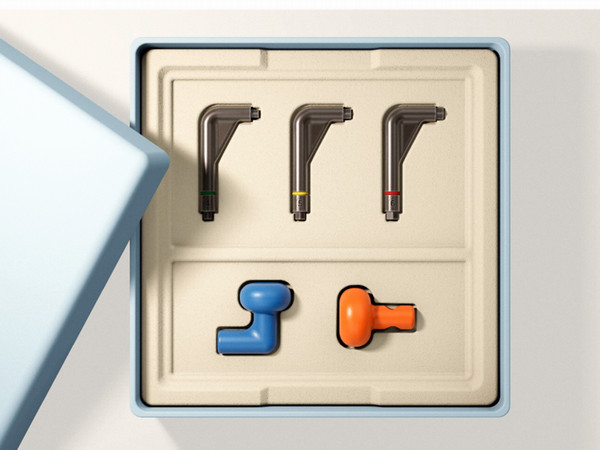
Siddhi Ravi’s Turn Kit. Ravi has updated the Allen key with some heartwarming design insights. The colorful attachments make it possible for kids to help put together their new furniture and toys or, equally, help people with mobility/joint pain challenges join in the building. Additionally, the colors themselves are a nice touch because they make the tools more visible in low light conditions (you know, at 10pm when that crib just won’t come together). Also, the write-up notices
something astute, “Ravi hasn’t treated the Allen key as a problem to be solved by a motor.” Rather than drastically increase complexity, the solution to more inclusive building can be achieved with an elegant simplicity. The decision question that leads to this kind of innovation is a generous one, “Who is the Allen key a problem for? How can we make it a solution for them?” There is a great deal of innovation that can happen driven by those types of questions.
What if Aging Isn't the Problem?
Other times, innovation is unlocked when you stop seeing problems as problems and instead see them as opportunities. This way of thinking is opened up by a new research paper entitled, Aging as a Continuation of Development: A Hypothesis and Framework by Fabian-Xosé Fernandez, Lynn Nadel, and Sara Burke. In our culture, we see aging as a problem. This is particularly true of aging’s impact on our cognitive functions. Fernandez, Nadel, and Burke
see this change differently (incoming science speak), “the well-documented decline in episodic-memory precision reflects a deliberate recalibration of plasticity from hippocampal to cortical circuits, favoring semantic integration and schematic stability over rapid encoding of novel details. This shift, we suggest, is not a workaround for loss but an evolved optimization suited to the cognitive ecology of late life, when accumulated knowledge, social insight, and intergenerational teaching become primary adaptive functions.” In other words, the cognitive changes we experience as we age are only a shortcoming if we focus on what we get less good at. Instead, we could just as easily focus on what our brains are getting good at while we age. Namely, they get good at taking long-range, values-driven, big-picture views on circumstances. Our brains shift to get good at passing along wisdom. How can we maximize that?