How do you get people to learn? It’s an old question and one that matters a great deal. Our ability to teach and learn are two of our species’ great strengths. At the same time, anyone who has tried to teach another person something will tell you it isn’t easy. Lots of stuff can go wrong. In this edition of “Timely Innovations” we are going to look at three innovations in the world of teaching. What we learn from these innovators can apply to essentially any form of communication. So, let’s learn some educational do’s and don’ts.
Make it Real
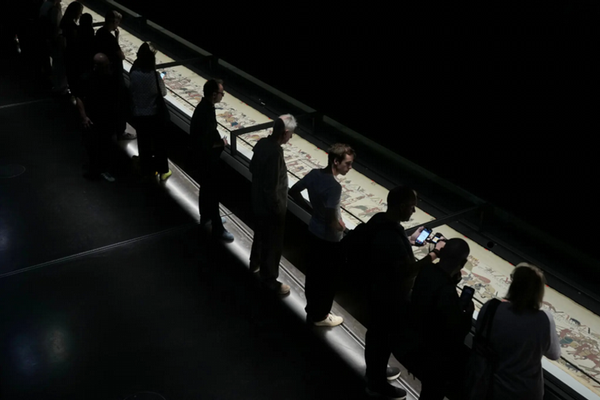
It’s basically 1000 years old. It’s got Brits very excited, and it can’t be exposed to daylight. No, it’s not Count Dracula, it’s the Bayeux Tapestry. Recently installed in the British Museum, the 200+ ft tapestry depicts the Norman Conquest of Britain in the 1000’s (in other words, an L for the home team).
Nevertheless, “When the first tranche of tickets went on sale this summer, over 80,000 people at a time waited online to buy them,” and “The British Museum hopes the show will attract about a million visitors during its 10-month run.” Why is this old, fragile, depiction of defeat garnering such excitement? Well
according to Mary Beard, historian and British Museum trustee, “It is an event that Britons can celebrate regardless of political persuasion, she added, because the events it depicts are deep history. It’s ‘a fantastically safe space,’ she said. The embroidery’s narrative simplicity also adds to its appeal, Beard added: ‘There’s no gatekeeper here saying, ‘Before you look at the tapestry, here’s 25 things you need to know.’ There is also a sense that viewing it at the British Museum is a once-in-a-lifetime chance to see an object that every child here studied in school.” In other words, the British Museum has brought in something that has existed in nearly every Briton’s imagination, but only in their imagination, something that communicates about their identity, and made it possible for them to experience it in-person. This may sound like a high bar, but is it? Are there perhaps smaller scale or less expensive ways you could give your audience a similar experience? Could you use photography? AR or VR? 3D printing a replica? We would bet that if you are reading this newsletter, you can probably think of something!
Teach the Bias, Too
Not all innovations in the education space are being received with quite as much enthusiasm. Advocacy groups are
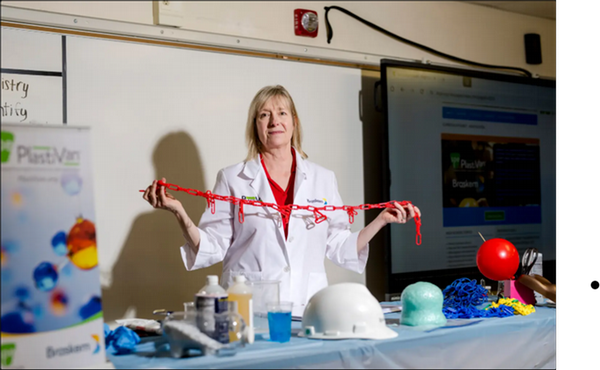
pushing back on a STEM Curriculum that has been developed by companies that manufacture plastics, “A
new report from the nonprofit Plastic Pollution Coalition documents the many ways the plastics industry has been inserting its agenda into classrooms across the U.S. — including through lesson plans and worksheets, hands-on science experiments, and a program called ‘PlastiVan’ that travels from city to city teaching students about ‘
the contribution plastics make to modern life.’ Industry interests offer these resources to teachers for free or for cheap, according to the report. The materials tend to highlight the necessity of plastics while downplaying their significant downsides to human health and the environment.” The existence and uptake of these materials points to broader challenges; teachers don’t have time to develop curriculum out of whole cloth, and many materials are beyond their budgets to acquire. While there are activists calling for bans on these materials, some
argue for a more nuanced (and perhaps subversive) approach, “Katie Allen, executive director of
Algalita, a California-based environmental nonprofit that develops educational materials on plastic pollution, pushed back against the idea that schools should ban all industry-sponsored content. ‘Once you start banning one thing, where does it end? What I want to do is give educators the benefit of the doubt and allow them to make their own decisions,’ she told Grist. She argued that teachers should be trusted to properly contextualize industry materials — and that they could even use them to teach critical-thinking skills.” That clause is particularly fascinating. Imagine the lightbulb that would go off in a student’s mind when a teacher encourages them to interrogate the biases of the textbook itself. All communicators have to deal with imperfect tools. Turning those imperfections into assets can be a powerful act of innovation.
Remove the Friction
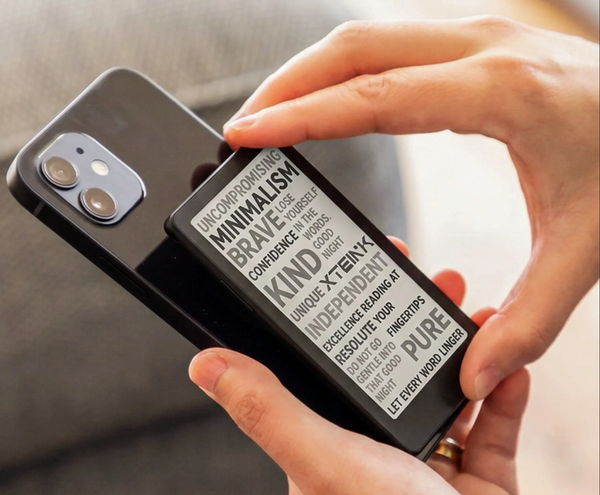
We are going to wrap things up with another imperfect tool: the Xteink X3. It’s,
according to Saahil Desai, “an e-reader the size of a credit card. It’s magnetic, and small enough to attach to the back of my iPhone without adding any real bulk to my pocket. (Yes, this does mean that I have a screen on the back of another screen.)” What’s interesting about it from a learning perspective? Basically, because it’s single-purpose and highly portable, it removes basically all friction from reading. Instead of doom scrolling while waiting in line, readers can flip their phone over and pick up their book. You get your endless scroll but with no push notifications to take you away from your book. In our world of digital distraction, there is still demand for single-purpose objects (dumb watches anyone?). A good task for any educator or communicator is identifying the friction points that stand between your message and your audience’s ability to onboard that message and then eliminating that friction. Happy communicating!